
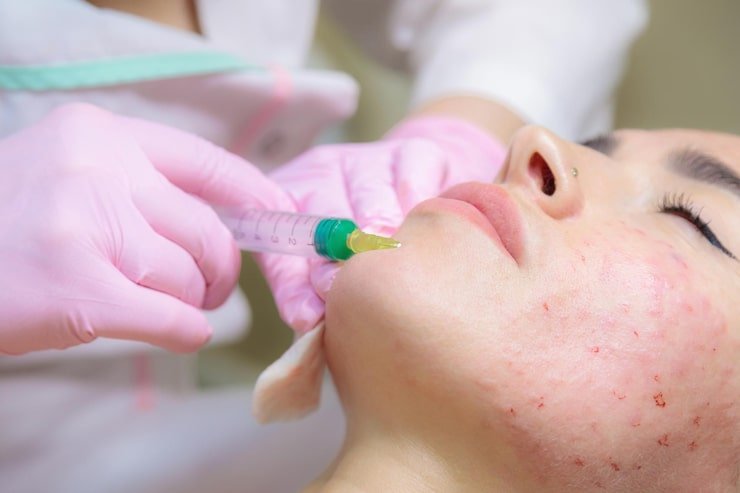
Acne is annoying enough on its own. But the scars it leaves behind? Those can stick around long after the breakouts are gone, showing up uninvited at every mirror check for years. If you’ve spent money on serums that promised the world and delivered… a mildly softer pillow for your wallet, you’re not alone.
Here’s the honest truth: most acne scars are structural. They form deep in the skin, not just on the surface. That means no amount of nighttime cream is going to erase them completely. What actually works is treatment that rebuilds collagen and repairs skin from the inside out.
This guide breaks down what real acne scarring treatment looks like today, based on how dermatology actually works, not on marketing hype. If you’re searching for acne scarring treatment in Frisco, this should give you a clear, no-nonsense starting point.
Why Acne Scars Are So Stubborn
When a pimple, cyst, or nodule causes inflammation, it damages the collagen and tissue underneath your skin. As your skin heals, it can either:
- Produce too little collagen, leaving behind a dip or indentation
- Produce too much collagen, leaving behind a raised bump
- Heal unevenly, leaving discoloration behind
This is why acne scars come in different shapes and personalities. Some are shallow. Some are deep. Some aren’t even “scars” in the technical sense at all.
First, Know What You’re Actually Dealing With
Not every mark left by acne is a true scar. This matters more than people think, because treating the wrong problem wastes time and money.
Post-inflammatory hyperpigmentation (PIH) shows up as flat, dark spots after a breakout heals. It’s discoloration, not structural damage, and it typically fades on its own within three to twelve months as skin renews itself.
Post-inflammatory erythema (PIE) looks similar but shows up as pink or red marks instead of dark ones. It’s also temporary in most cases.
True atrophic scars are permanent structural changes to the skin. These include:
- Ice pick scars – narrow, deep, and pointed
- Boxcar scars – wider with defined edges, like chickenpox scars
- Rolling scars – broad depressions with sloped edges that make skin look wavy
Hypertrophic or keloid scars are raised instead of sunken, caused by an overproduction of collagen during healing.
A board-certified provider can tell these apart with a quick visual exam, which is genuinely the fastest way to avoid wasting money on the wrong treatment.
The Treatments That Actually Work
There’s no single “best” treatment that fixes every scar type. The most effective approach usually combines two or three methods, tailored to your skin and scar pattern.
Microneedling
Microneedling uses fine needles to create controlled micro-injuries in the skin. This sounds a little intense, but the goal is smart: those tiny injuries trigger your body’s natural collagen production, which gradually fills in shallow to moderate scars over time.
It’s one of the more accessible options because it works on most skin tones with a lower risk of pigmentation issues compared to some laser treatments. Many providers pair microneedling with PRP (platelet-rich plasma, made from your own blood) to speed up healing and improve results.
RF Microneedling
Radiofrequency microneedling combines the mechanical benefit of microneedling with heat energy delivered deeper into the skin. This dual action makes it a strong option for deeper, more textured scarring, since it can reach fibrous tissue that plain microneedling doesn’t touch.
Downtime is generally short, often just a few days of redness or mild swelling.
Laser Resurfacing
Fractional laser resurfacing remains one of the most established options for moderate to deep acne scars. It works by creating controlled zones of injury in the skin, which stimulates collagen remodeling as it heals.
Different lasers work at different depths, so the right one depends on your scar type and skin tone. This is a conversation to have directly with your provider rather than something to self-diagnose from a video you saw at 1 a.m.
Subcision
For rolling scars, the problem often isn’t just the surface. It’s that fibrous bands are literally tethering the skin down from underneath, creating that shadowed, uneven look. Subcision uses a small needle to release those bands, letting the skin lift back into place.
It’s typically combined with fillers or PRP for a fuller result, and it requires real technique from an experienced provider to do well.
Chemical Peels
Peels aren’t the heavy hitters for deep scarring, but they play a genuinely useful supporting role. Different formulations, like salicylic acid, glycolic acid, or TCA, work at different depths and are especially helpful for pigmentation and mild texture concerns.
Peels are often used between other treatments to maintain skin quality and manage tone, almost like a maintenance step in a longer plan.
What About At-Home Products?
Consistent skincare matters, but let’s be realistic about what it can and can’t do. Topical products can support skin health, manage breakouts, and help pigmentation fade faster. They cannot rebuild lost collagen or dissolve existing scar tissue on their own.
If your goal is genuine texture improvement, at-home care works best as a supporting habit alongside professional treatment, not a replacement for it.
How Long Does It Actually Take?
Patience matters here, and honestly, that’s the part most people underestimate. At-home topicals typically need 8 to 12 weeks of consistent use before you can judge results. In-office procedures usually show early changes within 4 to 8 weeks, with the fullest results appearing over 3 to 12 months as collagen continues to remodel underneath the surface.
There’s no overnight fix. Anyone promising one is selling you something other than results.
Finding the Right Acne Scars Specialist in Frisco
Because acne scarring treatment depends so heavily on scar type, skin tone, and healing pattern, working with an experienced provider isn’t optional if you want real results. A skilled acne scars specialist will:
- Correctly identify whether you’re dealing with pigmentation or true structural scarring
- Recommend a combination approach instead of a single quick fix
- Adjust technique and depth based on your specific skin tone to reduce pigmentation risk
- Set realistic expectations for timeline and outcome
At Black Iris Medspa in Frisco, treatment plans start with an honest assessment of your skin, not a one-size-fits-all package. Because two people with “acne scars” can have completely different underlying issues, and completely different paths to smoother skin.
Setting Realistic Expectations
Complete erasure of deep acne scars is rare, and any provider telling you otherwise is overpromising. What’s realistic, and genuinely encouraging, is significant improvement. Most people see noticeable texture and tone improvement with a personalized, multi-treatment plan managed by an experienced provider.
The goal isn’t perfection. It’s confidence in your own skin, without needing three layers of concealer to get there.
The Bottom Line
Acne scars are stubborn because they’re structural, not surface-level. Fixing them takes treatments that rebuild collagen and address the actual tissue changes underneath, whether that’s microneedling, RF microneedling, laser resurfacing, subcision, or a thoughtful combination of these.
If you’ve been searching for acne scarring treatment in Frisco and you’re tired of products that don’t touch the real problem, a proper consultation is the fastest way to get a plan built around your actual skin, not a generic routine borrowed from the internet.
Your skin’s history doesn’t have to define its future. It just needs the right plan.